By Nick Hainsworth | April 26, 2022
The holy month of Ramadan began for Muslims all over the world a few weeks ago. From sunrise to sunset, Muslims do not eat food or drink water. In Islam, this practice is called sawm, or fasting. During the month, Muslims will read the Qur’an (their holy book), celebrate with their families every night at sunset for iftar meals, and reflect on God and their faith. The experience of Ramadan, as well as other Muslim practices, is influenced by geographic location.
For religious events, Muslims use a calendar based on the phases of the moon; one month is measured by the time from one New Moon to the next. Each month is around 29 or 30 days. Muslims are not the only people to use a lunar calendar, but they are one of the few that does not use leap days or months to make the year align with the solar calendar. Because of that, the Islamic calendar is about 11 days shorter than the Gregorian calendar. This means that every year, the month of Ramadan falls on a different thirty days. If Ramadan falls over the summer, the sunlight stretches longer, and so does the time Muslims are required to fast. If Ramadan falls over the winter, the opposite is true.[1]
Not only does the time of the year affect the length of Ramadan, but so does the location around the globe. In Saudi Arabia, where the Muslim holy city of Mecca is located, a Muslim might fast for 12-16 hours, depending on the time of year. How might that change for a Muslim living in Alaska? Or Iceland? Or Sweden? These Muslims face a difficult dilemma. Do these Muslims fast for twenty hours a day during the summer months while the sun is out? While some do, Islamic religious authorities have given special permission to Muslims living in places with extreme daylight hours to follow the fasting times of Mecca, if they so desire.[2]
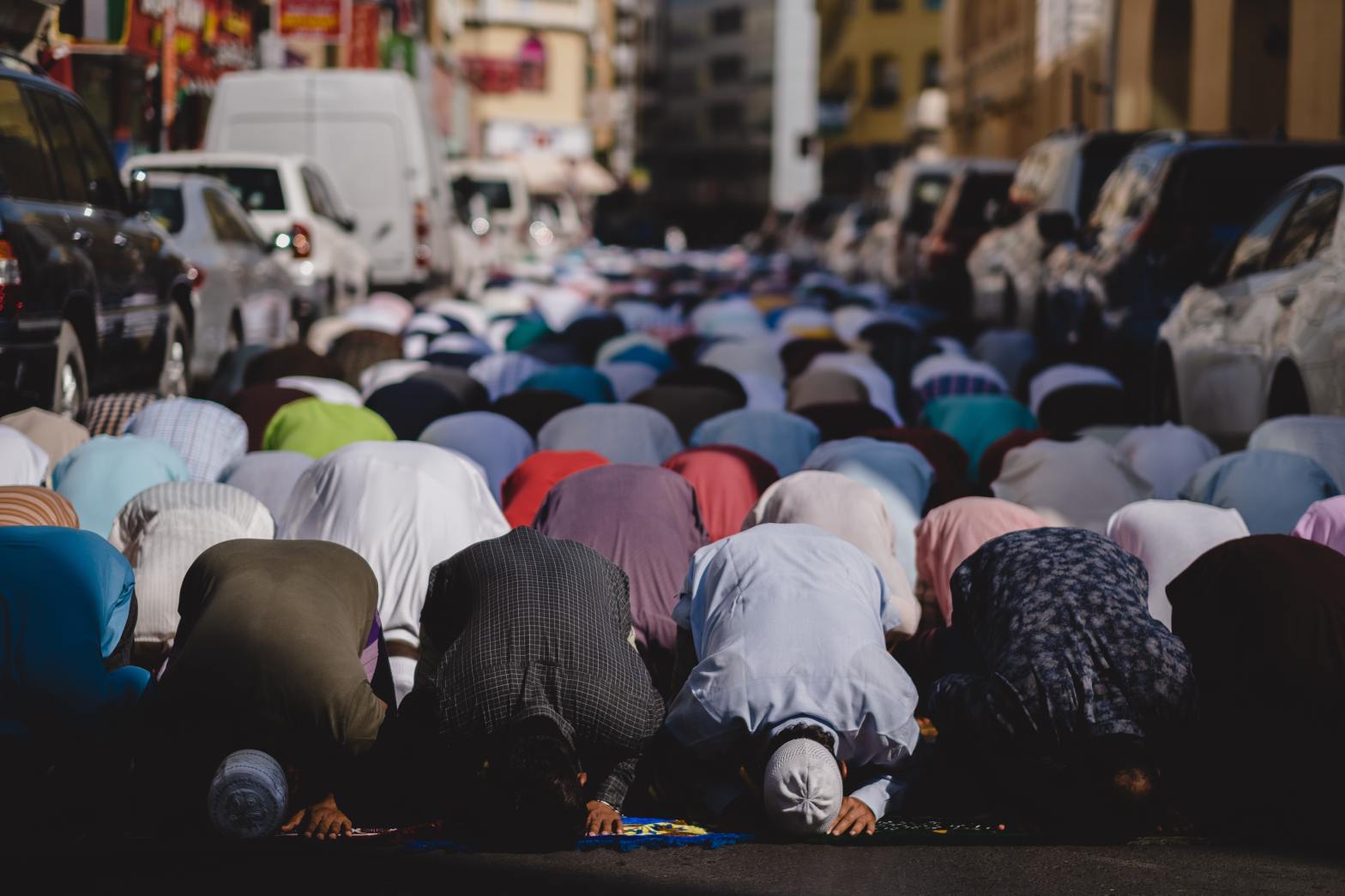
Ramadan isn’t the only Islamic practice affected by geography. Muslims around the globe face toward the Ka’bah in Mecca to perform their five daily prayers. This was not a difficult task when there were only a few hundred Muslims in the world who lived near Mecca. However, as Islam spread far across the globe, facing toward Mecca became a much more difficult task. The motivation to find an accurate direction toward Mecca motivated astronomical advancements in the medieval Muslim world. Now, Islamic scholars use technology to create apps and compasses that point to Mecca.[3]
People can’t help but live in a time and a place. As we see with the Islamic practices of Ramadan and prayer, time and place affect the daily religious lives of people all over the world in significant ways.
[1] https://www.timeanddate.com/calendar/islamic-calendar.html
[2] https://www.nytimes.com/2022/03/29/dining/ramadan-alaska.html?mc=aud_dev&campaign_id=23850610995850063&ad-keywords=auddevgate&subid1=TAFI&adset_id=23850635829430063&ad_id=23850635829690063&ad_name=INTER_20_XXXX_XXX_1P_CD_XX_XX_SITEVISITXREM_X_XXXX_COUSA_P_X_X_EN_FBIG_OA_XXXX_00_EN_JP_NFLINKS&adset_name=https%3A%2F%2Fwww.nytimes.com%2F2022%2F03%2F29%2Fdining%2Framadan-alaska.html&fbclid=IwAR18sSY7TUYMvDqnXdxs50n-yWSSb8gp_Dl7IKjfjY45HQt4RVbMV6p04UQ
 engageglobalstorytelling.com