By Nick Hainsworth
Language is one of the most powerful aspects of culture we have. Language can move, uplift, and inspire, or it can demean, oppress, and slander. Some of the most influential people and movements in history got that way because of charismatic and persuasive language. However, a language can’t go beyond the person who speaks it. It’s just as hard for a language to climb over a mountain as it for a person, and if people aren’t climbing over that mountain, their language won’t either. In this way, physical geography shapes how languages, culture, and ideas are shared.[1]
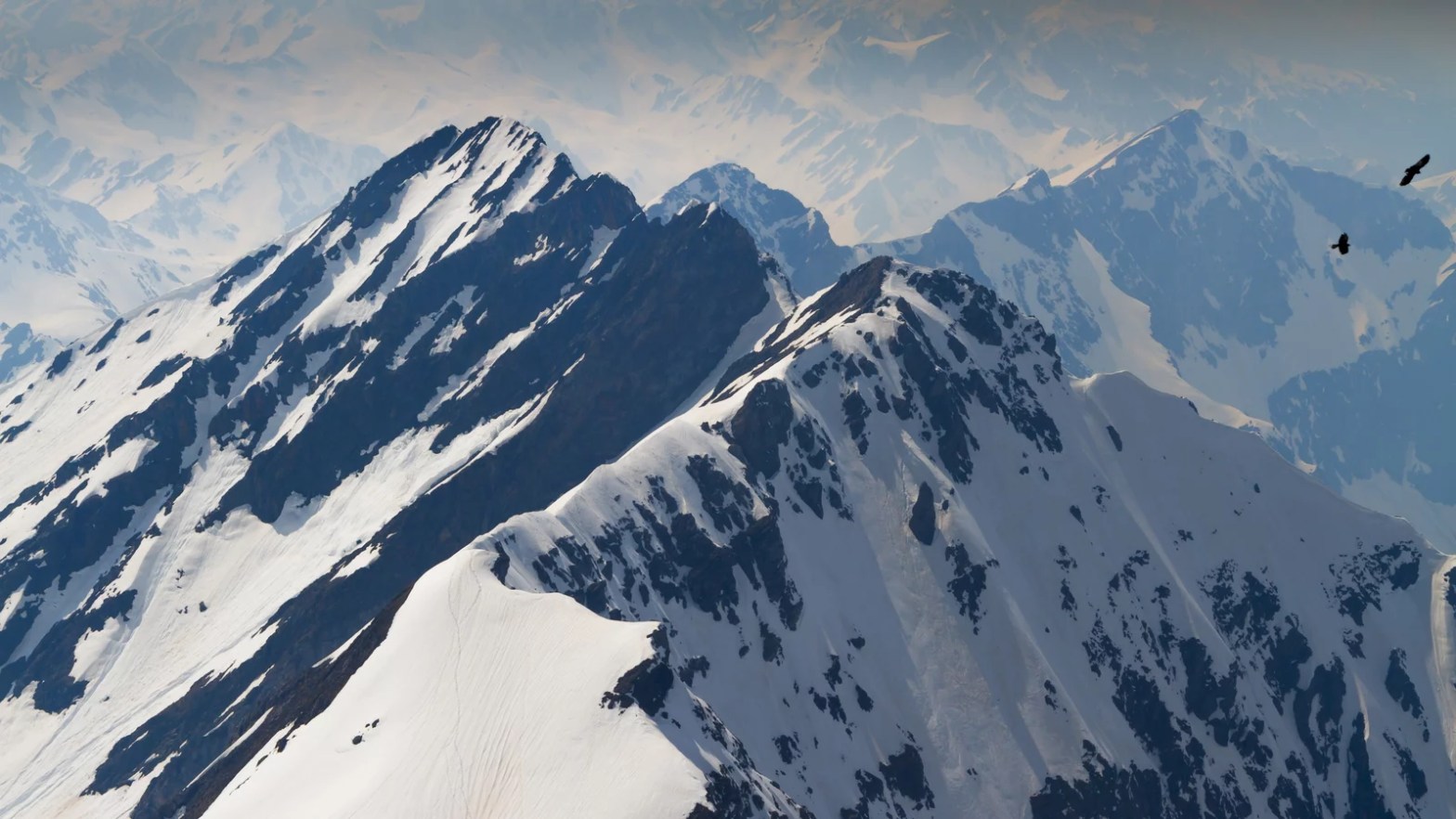
The Pyrenees is a mountain range that straddles the modern-day borders of France and Spain. Sitting in the western corner of these mountains is a community of Basque people. These people are a distinct ethnic group within Europe with their own language. However, the Basque language is not related to Spanish and French, which are both related to each other as Romance (Latin-derived) languages. In fact, Basque is a language isolate, or a language that is unrelated to any other in the world. The reason for this is a geographic one. The Basque community sits high up in the Pyrenees and is difficult to get to. Based on DNA evidence, scholars believe that around 1,000 BCE, the Basque people stopped intermixing with other European communities.[2] Thus, as Spanish and French people began to develop on a similar linguistic trajectory, the Basque community retained a distinct language. That isn’t to say that Basque people lived in total isolation; there was a level of cultural exchange (for example, most Basque people until recently identified as Roman Catholic, just like those in Spain and France). But the Basque language remained a unique cultural marker because of the community’s geographic position.
However, in the age of globalization, language has taken on a new form. The advent of the internet has altered and accelerated language development in keys ways. Whereas before, mountains, deserts, and oceans kept people and languages apart, the internet lets physically separate people communicate instantly and constantly.[3] This ever-increasing virtual proximity has blurred the lines of linguistic distinctiveness. English has become the lingua franca of the world, meaning it is often the common language among people who speak different languages. While this surely has its benefits, linguists also predict that half of the world’s languages will be extinct by 2100.[4]
What does this mean the relationship between geography and language? While the cultural richness that comes with language may suffer as languages disappear, people are adding their own regional flavors to spoken English and internet slang. For example, young Arabic speakers have adopted the Latin alphabet to write Arabic words, utilizing numbers and symbols to compensate for letters with no English equivalent.[5] Even as the internet age transcends previously impassable mountains, geography remains an essential component in understanding our interactions.
[1] https://www.babbel.com/en/magazine/language-geography
[2] https://www.ncbi.nlm.nih.gov/pmc/articles/PMC6436108/
[3] https://www.bbc.com/news/technology-10971949
[4] https://www.usnews.com/news/best-countries/articles/2017-05-23/half-of-worlds-languages-could-be-extinct-by-2100?context=amp
[5] https://storylearning.com/learn/arabic/arabic-tips/arabic-chat-alphabet
 engageglobalstorytelling.com